Coming Home to Mother Earth
From the desk of Heather Gallant, 577 Executive Director
Among the general busyness of life, several moments of wonder have stopped me in my tracks recently.
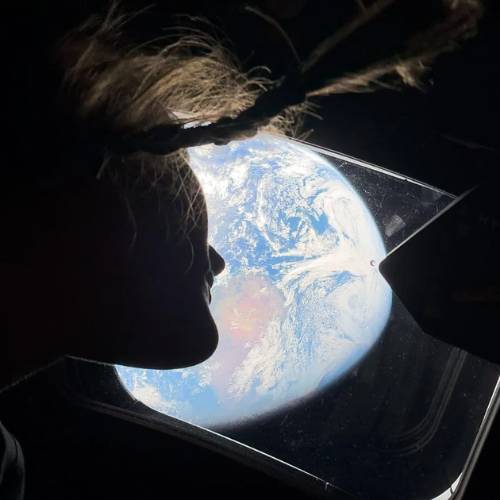
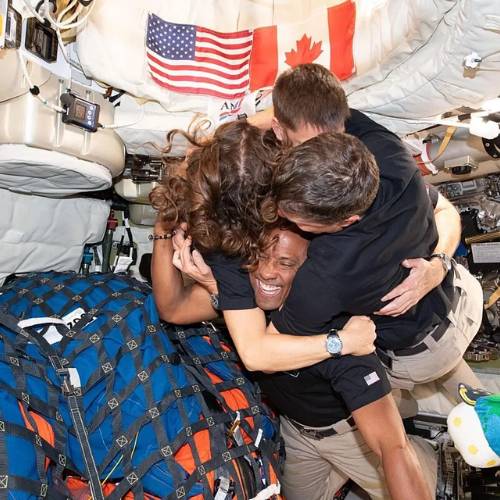
One was the Artemis II astronauts’ trip to the moon. Did you follow it at all? I found myself unexpectedly getting drawn into their glee and awe, their beautiful expressions of humanity with each other, and the wisdom that they shared. Zooming out to the farthest possible distance a human has ever been from Earth, they sent us pictures of this blue ball – our home – floating in the vast emptiness of space. I was struck by the beauty of it all: the humor and vulnerability shared by the astronauts, this incredible group project that took the effort of so many people for this trip to even be possible, the curiosity and creativity that it took to get to this point.
Sure, humans have been to the moon before, but this voyage feels special all over again. I found it especially lovely that, in addition to the physical, mental, mechanical, and scientific preparations the astronauts made before leaving, they prepared in some other, unexpected ways. Did you know that they took photography classes for two years before blasting off so their pictures could be both scientifically accurate and artistically moving? That one of the astronauts learned from Indigenous elders and knowledge keepers for so long that they invited him to participate in a four-day-long ceremony at their lodge? That after the ceremony, he asked an Anishinaabe artist to design him a patch representing the Seven Grandfather Teachings, the seven laws for all humanity: respect, love, courage, honesty, wisdom, humility, and truth?
When four humans blasted into the unknown, a place they’d never personally been and had little context for knowing what it would be like, they prepared as best they could, in the most well-rounded way possible. Their preparation wasn’t strictly engineering and scientific (though those were critically important). It also included art, the humanities, history, culture, problem-solving, and ancient wisdom about what is important. These things weren’t an afterthought; they were carefully planned for so that these four people could relate their experience – which none of us are likely to ever have – to the rest of us, and we could feel it too. What generosity! What foresight!

There are some things that humans are much better for than machines.
Being well-rounded and open to new experiences really has perks!
In a similar vein: Did you make it to Robin Wall Kimmerer’s talk at BGSU a few weeks ago? Nearly 900 people filled the Kobacker Hall on March 27 to hear wisdom from this incredible mother, scientist, decorated professor, award-winning author, and enrolled member of the Citizen Potawatomi Nation. I’ve written to you about her before, as her vision for living aligns with much of what we’re trying to promote here at 577: that orienting your life around gratitude, reciprocity, sharing, community, curiosity, and creativity are echoes of how the natural world operates, and a beautiful way for humans to be.
Her talk was inspiring and challenging. She spoke of the One Dish One Spoon law, which was agreed upon by indigenous peoples of the Americas since at least the year 1142 as a means of sharing hunting territory among various nations. The one dish represents sharing: we all eat out of the same bowl (the Earth), and we would all go hungry if it became empty. The spoon represents equality: it’s not a big spoon for some and a smaller spoon for others; we all use the same spoon and only take what we need, so there’s some left for everyone else to also eat.
Dr. Kimmerer suggested that rather than approaching our lives and opportunities around, “what can we take?” that we instead ask ourselves, “what can we give?”
Speaking of gratitude, Dr. Kimmerer suggested that we should continually wake up, every day, with existential gratitude, thanking the Earth for the very oxygen that gives us breath. She highlighted that when a human braids sweetgrass, a significant sacred plant to her people and the title being of one of her books, it is thought to be an intimate act, as careful and caring as braiding the hair of a beloved parent or child. It is the act of braiding Mother Earth’s hair.
She urged us to be tender with one another, including the Earth and everything on it, and that we view land and all of the beings on it as sacred members of our family, not property to be owned or resources to be extracted. Non-human relatives like trees, rocks, moss, and animals have wisdom and science to teach us as well, and we have a moral obligation and responsibility to take care of them.
In giving voice to the land that is all of our relatives, Dr. Kimmerer demonstrated what it’s like to revere the natural world around us as a beloved grandmother who always took care of you, tucking you into bed safely with a belly full of warm cookies, a soft, handmade quilt, and a lullaby.
How did we get so far removed from that, and what would it take for us to come back, especially during this Earth Month in 2026?
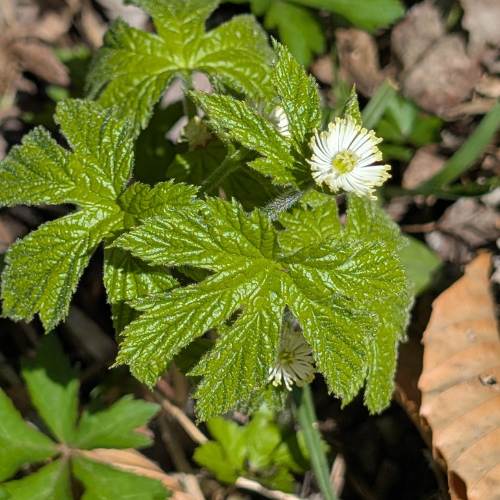
Maybe a little dose of April springtime would help. A few blooms and the smell of rain and the sunshine hitting your face.
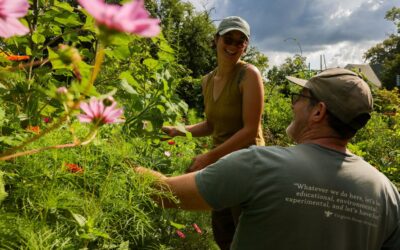
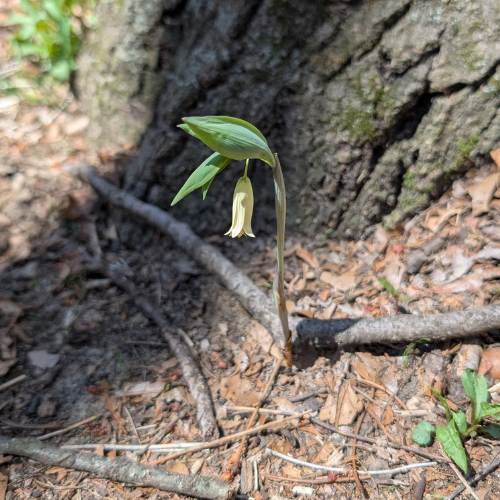
(These are a few of our favorite native plants, quietly growing across the 577 grounds.)

Maybe it’s the first taste of fresh peas from your garden, or a sketch you made in the park.
Maybe it’s an inspirational talk from a knowledge keeper at a University, or in a lodge, or sitting next to you as you throw a pot or make a stitch at 577.
Maybe it’s a photograph of Mother Earth from 252,756 miles away.
If there’s any way 577 can help you come home to yourself and Mother Earth, please let us know! Trying out one of our classes or attending Go Green Day might be a place to start.
Take care,
Heather
Photo Credits:
- Christina Koch views Earth from Orion NASA astronaut and Artemis II mission specialist Christina Koch looks at Earth from the window of the Orion spacecraft on its way to the Moon during the Artemis II mission. At the time, Christina was already farther away than any woman has ever been from our planet.Image: NASA
- Artemis II crew hug The Artemis II crew shares a group hug the day after their flyby of the Moon. The crew said in one interview that the thing they will miss most about their time in space is each other. They had been training together for their mission for the past three years.Image: NASA
- Cameras capture Artemis II’s launch The world was watching as NASA’s Artemis II mission launched on April 1, 2026, thanks to the work of science communicators and journalists from around the planet. Here you see cameras set up to capture the launch.Image: NASA/Aubrey Gemignani